 Nidin Vadassery
Technologies are shaped by human bias and prejudice. Sometimes unknowingly, and most of the time, being ignorant. In the 1970s, Kodak's film was color-biased, and they rectified it with a poetic line: now you can take a picture of a ‘dark horse in low light’. In 2026, the trend follows, not from new problems but from a repeat of historical bias and prejudice. Technological advances, I want to say without accusing, have benefited a certain section of the community. It is amusing to read that Kodak film was color-biased before desegregation. Even after complaints from mothers of black kids, the company didn’t act. Only when some big companies made a fuss about the color of dark chocolate and wood did Kodak change its film formulation. Today, these biases have trickled down into data used to train models that can predict whether you get a loan, whether you are a criminal, or whether you get a job.
I haven’t thought much about AI's implications for my life, but doomscrolling through Instagram led me to the curious term algorithmic monoculture. A recent Stanford study shows the adverse impact of AI models on a certain group in hiring. In simple terms, if you apply for a job, the AI model reviewing the application will disproportionately screen out the application. Researchers analyzed 4 million applications submitted by 3 million applicants. Based on the study, 1 out of 4 Black applicants and 1 in 7 Asian applicants are at a disadvantage and are rejected.
It would be ridiculous to ask companies to return to old review methods. Well, then it would be impossible for a human to review thousands of applications. Most of the companies rely on an ATS filter to screen out 1000 applications. Naturally, companies cannot be blamed for using the tools. But then where do the problems come from? Surely words cannot reveal an applicant's ethnicity or gender. That’s what I thought. Until I realized that biases in our thoughts get reflected in data. Imagine an AI model that checks credit scores; historically, men have been granted loans, and they repay them. Even though the AI model won’t be gender-sensitive, the historical data will show that women have lower credit scores, so it won’t give them a loan.
Bias is deeply ingrained in society. There is no doubt about it. But responsible development of the model depends on the developer. Stanford HAI reports that the model’s societal impact and bias are sparsely reported. What can it really lead to? Think of AI as a kid who is still exploring the world, but with numbers. The problem is that learning is purely mathematical; however, numbers alone don’t have any meaning; we give them meaning. Irresponsible teaching might produce a super-intelligent kid who learns fast. You cannot say no to a kid because we made them a sycophant, someone who is super eager to please. In the process, the bias grows, and there are pockets of discrimination that exist but are never resolved.
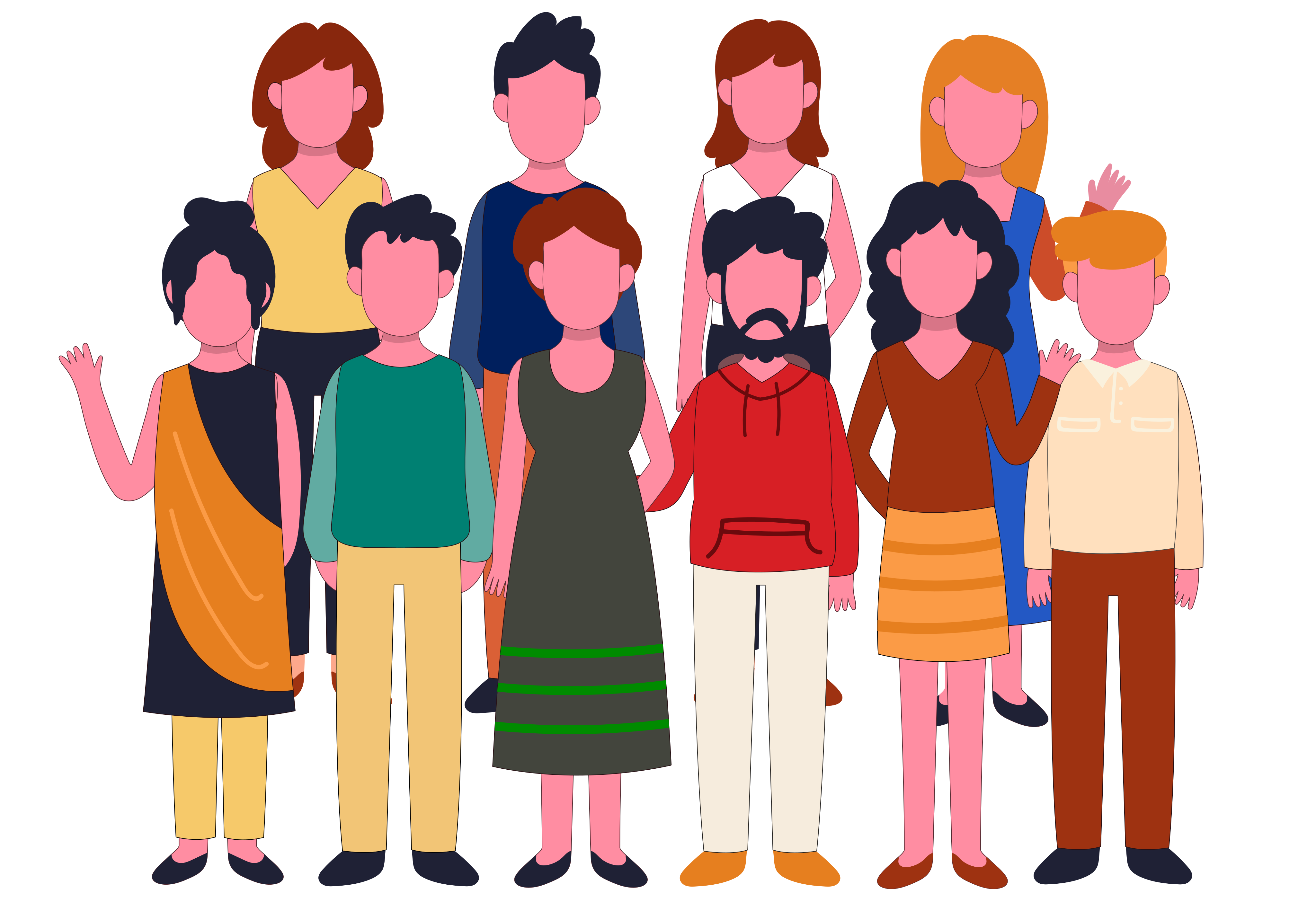
With that, I want to say let the people be a shade of gulab — rose and be unbiased to stop the trickle-down.
References
Ainissa Ramirez, How 20th Century Camera Film Captured a Snapshot of American Bias, TIME (2020).
Rishi Bommasani, et al. Algorithmic Monocultures in Hiring, arXiv, (2026)
Navya S. D., Sreekanth D., Dr. S. S. Uma Sankari, Structural Gender Bias in Credit Scoring: Proxy Leakage, arXiv (2026) .
How Artificial Intelligence Bias Affects Women and People of Color (2026)